


The Posture and Back Pain Connection.
For years, posture has occupied an uneasy place in discussions about back pain. On the one hand..

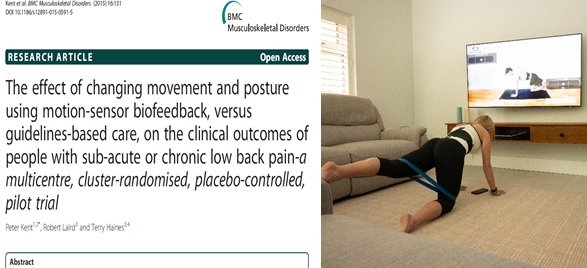
New Research confirms what Physiotherapists suspected. Good Technique and Feedback Significantly reduces Back Pain.
For years, posture has occupied an uneasy place in discussions about back pain. On the one hand, people have been told to “sit up straight” or “mind their posture”. On the other, more recent voices have dismissed posture altogether as irrelevant or even harmful to focus on.
As is often the case, the truth lies somewhere in between.
Emerging research is now lending weight to what many physiotherapists have long observed in practice: it is not posture alone that matters, but how we move — and whether we receive meaningful feedback to help us move better.
The Evidence Behind Technique and Feedback
A landmark study published in BMC Musculoskeletal Disorders followed people with persistent low back pain over the course of a year. Rather than focusing solely on strength or flexibility, researchers looked at whether changing movement patterns — specifically how the lower back and pelvis move during everyday tasks — could influence pain outcomes.
Participants who received movement-specific feedback using wearable sensors, alongside standard physiotherapy advice, experienced greater and longer-lasting reductions in pain and disability than those who received advice alone.
Perhaps most striking was that these improvements persisted long after formal treatment had ended. The implication is important: when people learn to move differently — and are supported with feedback during that learning process — the benefits can endure.
In other words, this was not a short-term fix, but a process of retraining how the body moves.
Why Posture Alone Misses the Point
Much of the confusion around posture stems from the idea that there is a single “correct” position the body should hold all day. Research increasingly suggests this is neither realistic nor helpful.
Human bodies are designed to move. Problems tend to arise not from occasional poor posture, but from repeated, unhelpful movement patterns that load the spine in the same way, again and again, often without the person being aware of it.
This is where feedback becomes crucial. Without it, people often revert to familiar habits — particularly when distracted, fatigued or under load. With feedback, however, the nervous system begins to recognise and adopt alternative strategies that place less strain on sensitive structures.
From Clinic Insight to Everyday Life
Physiotherapists have used verbal, visual and tactile feedback for decades to help patients regain movement confidence and control.
When with their patients they can make sure they are doing their exercises correctly and learn to move better. But what happens when they are at home and trying to remember the same cues. A lot of patients don’t have confidence they are doing exercises or engaging their core correctly.
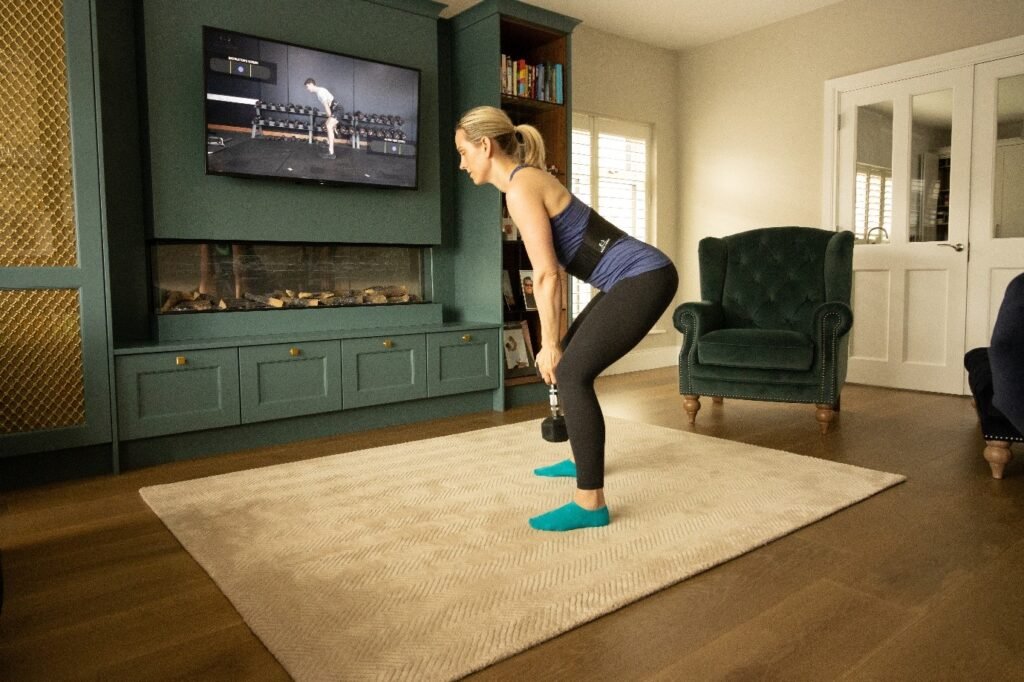
What wearable technology now offers is the ability to extend that guidance beyond the clinic and into daily life — during sitting, lifting, training, or simply moving through the day.
Devices such as the BackAware Belt are built on this principle. By providing subtle, real-time feedback when a person moves into positions known to aggravate symptoms, the aim is not to enforce rigidity, but to encourage awareness, variation and better technique.
Over time, this feedback becomes less necessary as new movement patterns are learned — a process well recognised in motor learning research.
A More Nuanced Conversation About Back Pain
The growing body of evidence suggests we need a more balanced conversation about posture and back pain — one that avoids extremes.
Posture is not irrelevant. Nor is it something to obsess over. What matters most is how people move, how often they vary their movement, and whether they are supported in developing healthier patterns over time.
As research continues to evolve, one message is becoming clearer: good technique, reinforced by timely feedback, can play a meaningful role in reducing back pain and improving quality of life.
For those living with persistent back pain, that is a quietly hopeful conclusion — and one that aligns science with what clinicians have long seen on the ground.

